
Electrocardiogram
An Electrocardiogram (ECG/EKG) Interpretation Course provides healthcare professionals, medical students, and paramedics with the essential skills to record, read, and analyze the electrical activity of the heart. The training transitions learners from understanding core cardiac physiology to diagnosing critical, life-threatening cardiovascular abnormalities.
Overview
Foundational Principles
- Cardiac Anatomy and Electrophysiology: Exploring the structure of the heart, chambers, blood pathway, and cellular ion channels.
- The Conduction System: Studying how electrical impulses travel natively from the sinoatrial (SA) node to the atrioventricular (AV) node and ventricles.
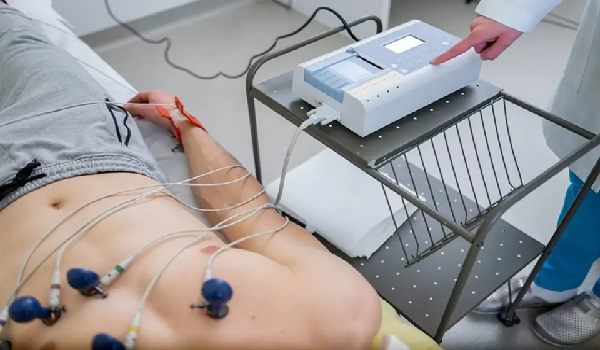
- ECG Graph & Technical Administration: Reading the physical properties of ECG paper (voltage, boxes, timing), placing leads properly in a standard 12-lead setup, and identifying or correcting recording artifacts.
Systematic ECG Interpretation
- Waveforms, Segments, and Intervals: Measuring and evaluating the individual components of the ECG trace—including the P-wave, PR interval, QRS complex, ST-segment, T-wave, and QT interval.
- Heart Rate & Cardiac Axis: Calculating the beats per minute for regular and irregular rhythms (e.g., using the 6-second method) and detecting axis deviations.
- Normal Sinyr Rhythm: Identifying the criteria that establish a fully normal, healthy baseline trace.
Clinical Pathology & Abnormalities
- Arrhythmias & Dysrhythmias: Diagnosing sinus rhythms, atrial fibrillation, atrial flutter, junctional rhythms, and ventricular conditions.
- Conduction System Diseases: Identifying various heart blocks (First, Second, and Third-degree AV blocks) and bundle branch blocks.
- Ischemia, Injury, and Infarction: Recognizing acute coronary syndromes, notably ST-elevation myocardial infarctions (STEMI) and non-ST-elevation MIs (NSTEMI).
- Chamber Hypertrophy & Systemic Effects: Detecting signs of left or right atrial/ventricular enlargement, alongside tracing the effects of systemic electrolyte imbalances (like hyperkalemia).