Diploma in X-Ray Technology
An X-Ray course generally falls into two categories: a professional medical technology program to become a radiographer, or a specialized diagnostic interpretation course for healthcare practitioners. Depending on the specific program, the curriculum covers a blend of radiation physics, human anatomy, patient positioning, safety protocols, and clinical diagnostics.
Overview
1. Fundamental Medical & Imaging Physics
Students learn the underlying science of how radiation interacts with human tissue to form images.
- Atomic Structure: Core rules of matter and basic radiological physics.
- X-Ray Tube Production: The engineering behind cathod-anode interactions inside vacuum housings.
- Beam Manipulation: Adjusting current and voltage settings via the 15% rule in radiography.
- Technology Types: Transitioning from screen-film to Computed Radiography (CR) and direct digital setups.
2. Anatomy and Patient Care
Proper diagnosis depends heavily on positioning the body accurately while ensuring patient comfort.
- Human Anatomy: Comprehensive study of bone structures, respiratory paths, and organ systems.
- Patient Positioning: Learning exact geometric placement for skull, chest, abdominal, and extremity views.
- Contrast Administration: Handling contrast media injections and managing prospective allergic reactions.
3. Radiation Safety & Protection
Because X-rays emit ionizing radiation, rigorous safety habits are a vital curriculum element.
- Radiation Doses: Monitoring radiation units and biological impacts over time.
- Protection Protocols: Implementing lead shielding, collimation filters, and distance monitoring.
- Device Management: Utilizing personal radiation dosimetry badges.
4. Diagnostic Image Interpretation
For clinical practitioners, courses focus entirely on systematically looking at a finished radiograph.
- Chest X-Rays: Identifying lung zones, heart contours, and pathology signs via platforms like the Radiopaedia Learning Pathways.
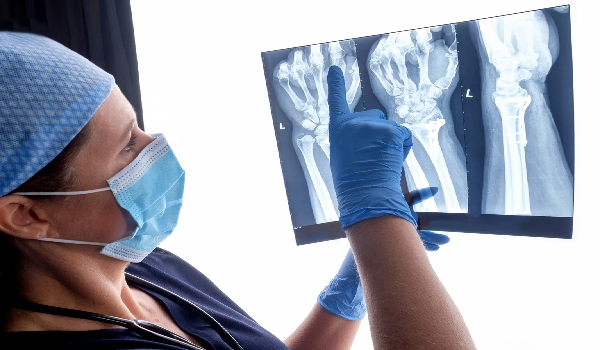
- Orthopedics & Trauma: Spotting fractures, bone conditions, and joint dislocations.
- Abdominal Exams: Systematically reviewing bowel gas patterns and abnormal calcification.
Academic Frameworks & Careers
- Academic Formats: Available as short clinical certificates via Radiology Masterclass, a Diploma in X-Ray Technology (1–2 years), or a Bachelor's Degree (3 years).
- Career Tracks: Prepares graduates to work as certified radiographers, X-ray technicians, or clinical assistants.